


Fire pit ignition systems
Fire pit ignition systems,
matched to your project.
Compare manual, battery-powered, and wired ignition options for your outdoor fire feature. Start with your power, burner requirements, and how you want to use the space.
Have a question? Call a Flame Specialist: 303-346-2224
Start with the basics
What does an ignition system do?
The burner creates the flame. The ignition system determines how you start and control it.
Your choice affects power planning, everyday operation, and available controls. Some automatic systems also offer relighting and safety shutoff functions.
Choose your ignition together with the burner and the requirements of your installation.
Know your options
Compare ignition systems.
Start with power, operation, and capacity.

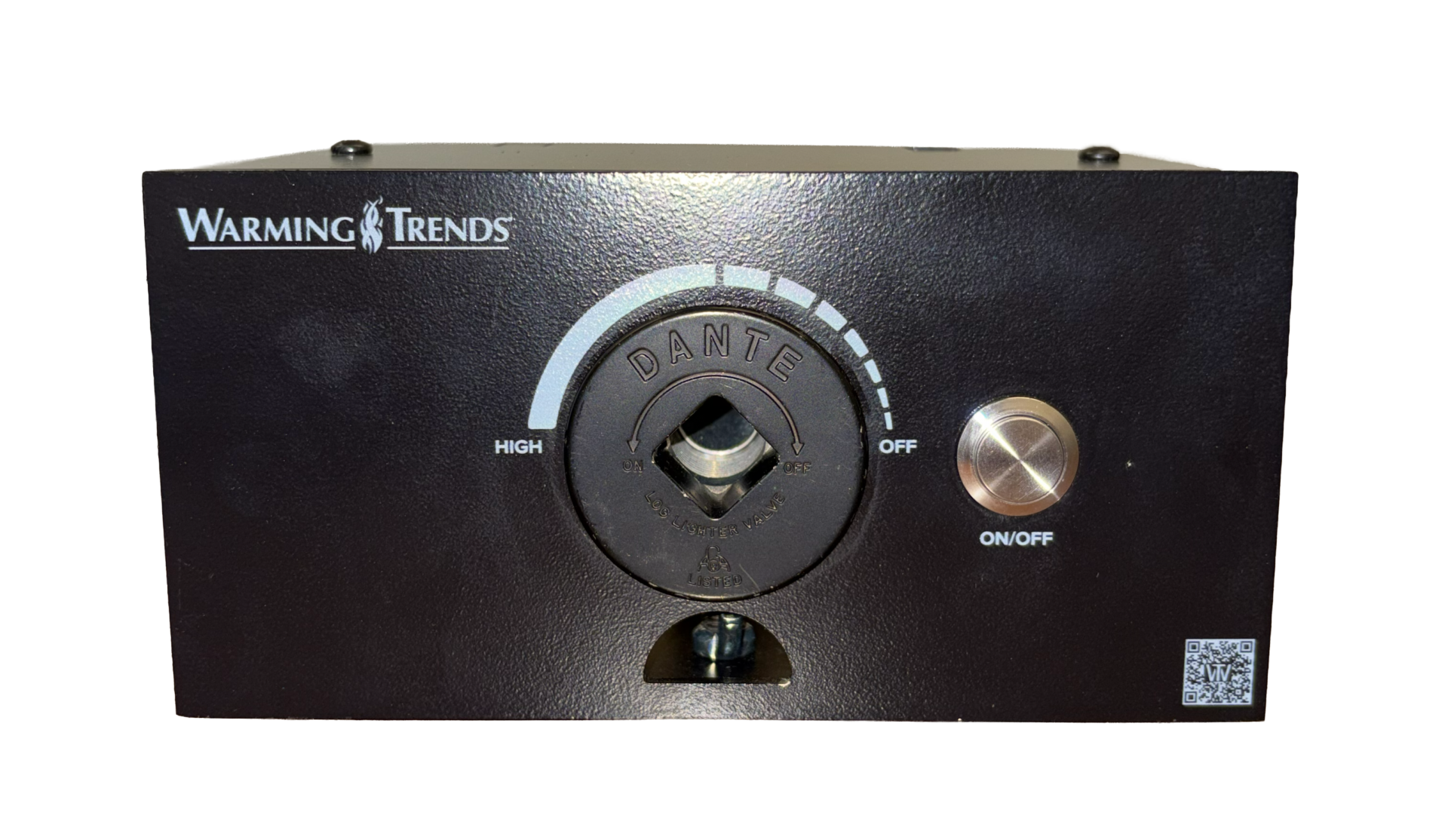
Mercury
Carbon 3V

Cobalt 12V

Platinum 24V
Mercury
No site electricity
Standing pilot; battery spark
240,000 BTU/hr
Moderate-output or remote projects
Carbon
3V automatic
Battery or direct-wire model
360,000 BTU/hr
Single near-water or remote features
Cobalt
12V automatic
Transformer-powered
490,000 BTU/hr
Near-water projects and coordinated multi-unit planning
Platinum
24V automatic
Transformer-powered
680,000 BTU/hr
Larger, higher-output features
Published capacity ceilings are not recommended burner sizes or guaranteed installed output. Confirm the exact system, gas supply, power, and installation requirements before choosing.
Prefer manual operation?
Match-lit ignition uses manual lighting. Push-button ignition supplies a battery spark while retaining manual gas-valve operation.
Not sure which system you need?
Tell us about your project. We can help you compare.
Make it fit your space
Where should you start?
Choose a situation to see which options to discuss with a Flame Specialist.
A starting point
Compare Mercury and battery-powered Carbon.
Both offer options without site electricity. Compare the operation you want and the capacity your burner requires.
Confirm: burner demand, desired controls, and access for service and batteries.
A starting point
Compare Carbon and Cobalt.
Carbon has battery and direct-wire models. Cobalt is a transformer-powered option for near-water projects and
coordinated controls.
Confirm: burner demand, power, location, controls, and poolside installation requirements with your installer.
A starting point
Discuss Cobalt or Platinum with a Flame Specialist.
Start with the number of features, output per feature, and the way you want them controlled.
Confirm: transformer and power layout, gas supply, controls, and site requirements for every feature.
A starting point
Evaluate Platinum for higher-output features.
Its published maximum gas output is 680,000 BTU/hr. Projects beyond standard system capacities need a separate review.
Confirm: actual burner demand, available gas, power, configuration, and installation requirements.
A starting point helps guide the conversation. Final selection depends on the full project and installation requirements.
Plan with confidence
A few details go a long way.
You don’t need to have every specification ready. Share what you know, and we’ll help identify the next steps.
Your fire feature
New or existing, size, burner model, and photos or plans.
Gas and power
Fuel type, available power, and burner demand if known.
Your setting and controls
Near water, multiple features, residential or commercial use, and intended controls.
Keep your project moving
Planning resources.
Ignition sell sheets
Review the current system details and available models.
Owner’s manuals
Use the current instructions for your exact system.
Gas supply planning
Find the gas pipe size and BTU supply chart.
CAD details
Explore available drawings for project coordination.
Answers before you choose
Ignition questions, answered.
Which ignition system is right for my fire feature?
Start with your burner requirements, available power, desired controls, and project setting. Our Flame Specialists can help compare options and identify the information needed for your project.
What is the difference between battery, 3V, 12V, and 24V systems?
Battery-powered options can help when site power is unavailable. Carbon offers 3V battery and direct-wire models, Cobalt uses 12V, and Platinum uses 24V. Operation and capacity also vary, so compare the complete systems rather than choosing by voltage alone.
Can I upgrade an existing fire feature?
An upgrade may be possible. Confirm the existing burner’s capacity, fuel type, compatibility, available power, and installation access before choosing a system. Send us a model number or photos if you need help identifying your burner.
Can electronic ignition work with home automation?
Cobalt and Platinum list home automation compatibility. Review the intended controls and electrical arrangement with your installer and a Flame Specialist before specifying the system.
What warranty applies to ignition systems?
The current ignition sell sheets list three years for residential use and one year for commercial use. Review the applicable product and current warranty terms; the burner’s lifetime warranty is separate.
Let’s plan your fire feature
Get help choosing.
Request a quote.
Share a few details about your project. Our Flame Specialists can help you compare systems and guide you toward a quote.
You don’t need to have every specification ready.
"(Required)" indicates required fields